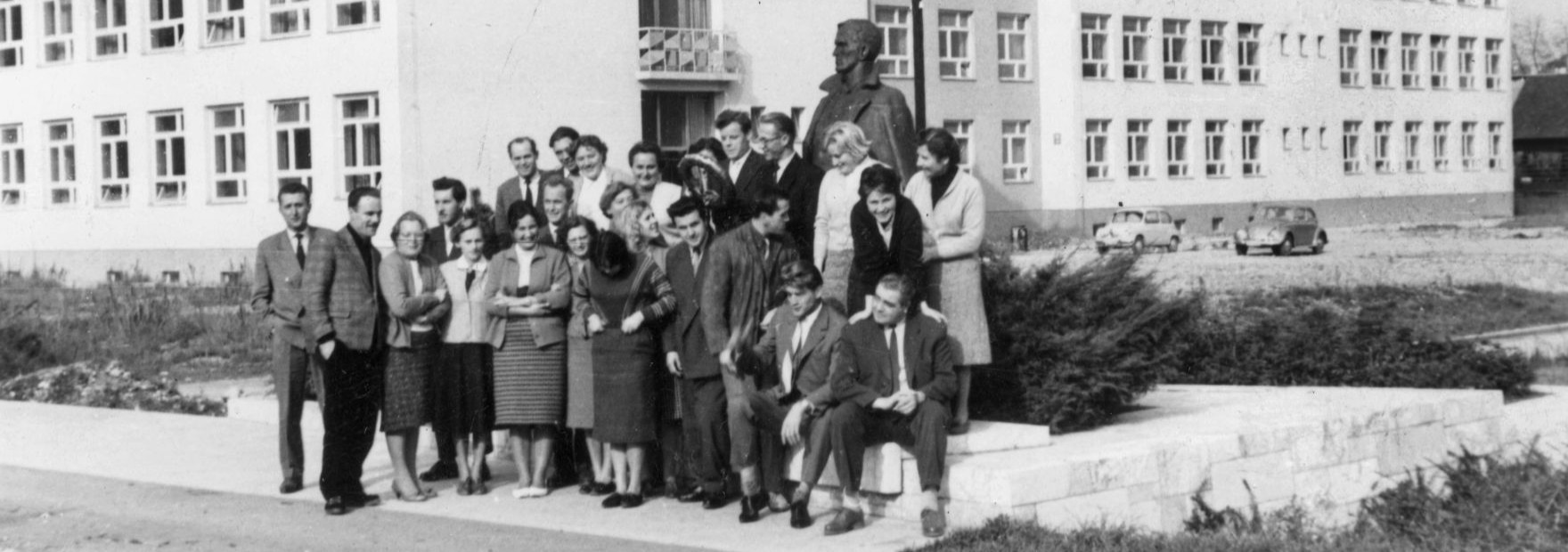
Social Work in Socialist Yugoslavia and the Republic of Slovenia 1952–2025
Exhibition opening: September 30, 2025
On view until: November 23, 2025
Location: Knights’ Hall lobby
Author of the exhibition and texts: Dr. Darja Zaviršek
Following the Second World War, socialist Yugoslavia became the only Eastern European country to introduce social work training programmes in all its republics. Elsewhere, the communist authorities believed that socialism alone would meet people’s needs, by providing universal employment for men and women and universal insurance for social and health issues and old age. In this context, social work was mainly seen as the domain of wealthy “Western ladies”, while their importance in introducing social reforms and pioneering social justice was overlooked. This meant social work was not entirely welcomed and faced resistance, prejudice and censorship. After breaking with the Stalinist Soviet Union in 1948, Yugoslavia relied on the United Nations Technical Assistance organisation, which worked to establish social work education in many countries worldwide.
Social work began to develop as a profession, practice and social science discipline in Yugoslavia in the early 1950s. As a practice, social work was both an art of helping and “the prolonged hand” of the state, which used social workers to achieve social policy goals. The ongoing process of professionalisation required the development of specialised training and theoretical and practical knowledge, the formation of a professional identity and autonomy, the establishment of a code of ethics and the regulation of the profession. It also required the creation of workplaces specifically for social workers.
In Slovenia, three pioneers spearheaded this new profession: Nika Arko, Katja Vodopivec and Marija Jančar. During the 1960s and 1970s, Centres of Social Work were established as major community-based social welfare institutions alongside segregated, long-stay residential care facilities for children and adults with disabilities. The Higher School for Social Workers was pivotal in developing contemporary social work concepts during these decades. Following a period of mass unemployment and growing poverty after 1991, marked by the arrival of refugees from the former Yugoslavia, the development of private institutions and non-governmental organisations, service user movements and activism for deinstitutionalisation, the discipline of social work participated in the democratisation of everyday life in Slovenia. In this way, social work established itself as a human rights profession.
The exhibition is a collaborative project between the Faculty of Social Work (University of Ljubljana), the National Museum of Contemporary History of Slovenia, and the Slovenian Academy of Sciences and Arts.
The exhibition is supported by the Ministry of Culture of the Republic of Slovenia.