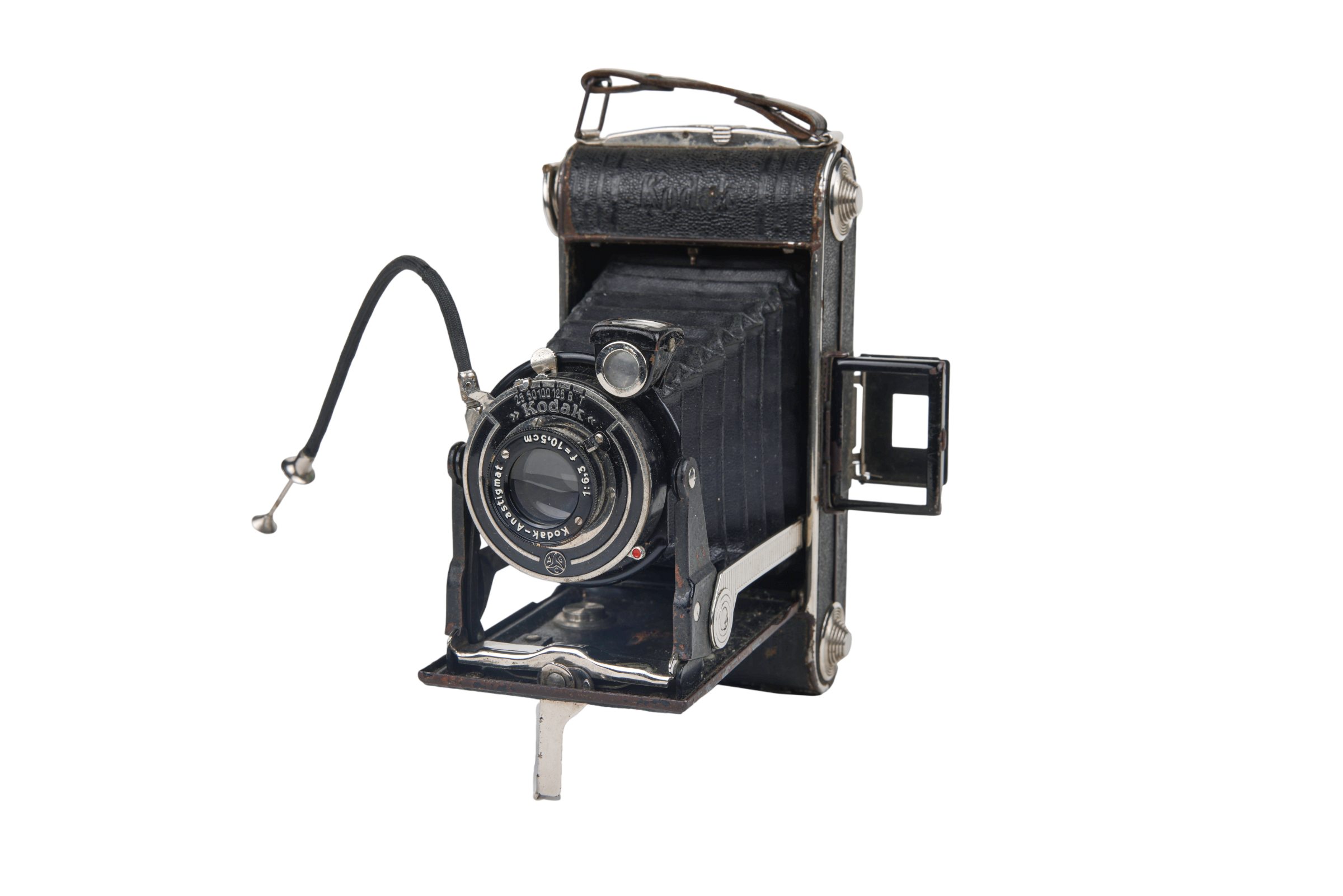
The object of the month is the Kodak Junior 620, an American analog Art Deco camera, versions of which were manufactured in Stuttgart between 1933 and 1939. It is the only known surviving camera in Slovenia that was used in the Spanish Civil War (1936–1939), which began ninety years ago.
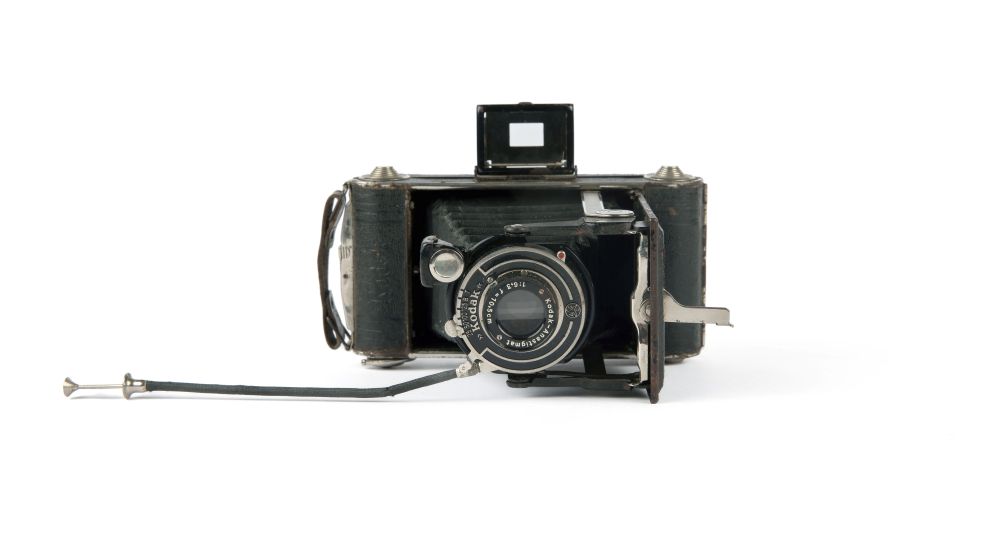
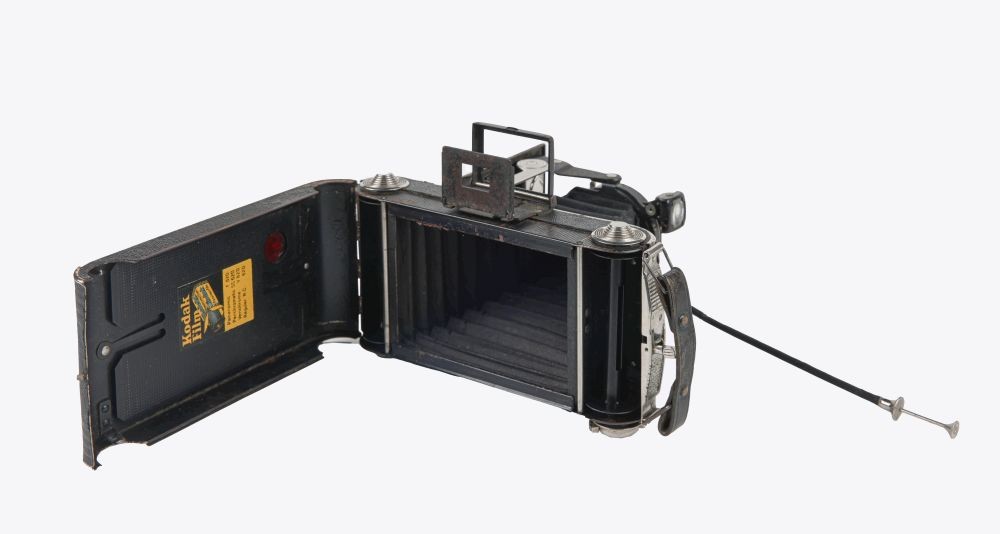
The number 620 designated the 620 film format, which was introduced in 1932 and it was produced until 1995. The photo negative format was 6 x 9 cm, with one roll of film providing eight exposures. Four different types of film were used for this kind of camera: Panatomic F 620 (suitable for large enlargements due to its fine grain), Panchromatic SS 620 (Super Sensitive for low-light photography), Verichrome V 620 (insensitive to red light), and Regular N. C. 620 (Non-Curling film). The camera features a folding bellows, a folding viewfinder, a black body, a chrome film winding knob, and other chrome elements. The “Anastigmat” inscription on the lens indicated an anastigmatic lens that corrected certain optical aberrations, meaning the photograph was sharp both in the center and at the edges. This model features four shutter speeds, or exposure times: 1/25, 1/50, 1/100, and 1/125, as well as T (Time – the shutter remains open and only closes with a second press of the shutter release) and B (Bulb – the shutter remains open as long as the shutter release is held down) settings. It has a focal length of 10.5 cm and an aperture range of f/6.3 – f/22. The camera allows for both horizontal and vertical photography, as it features a special chrome lever that serves as a stand. It also has a connection for a detachable cable release. The red window on the back for viewing the frame numbers on the film is protected by a sliding cover.
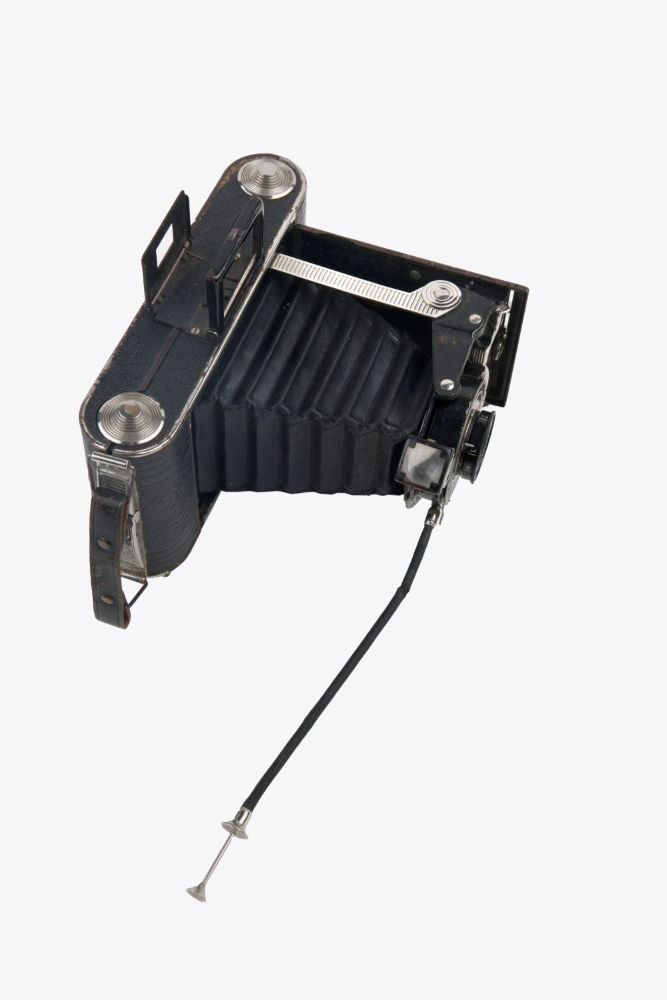
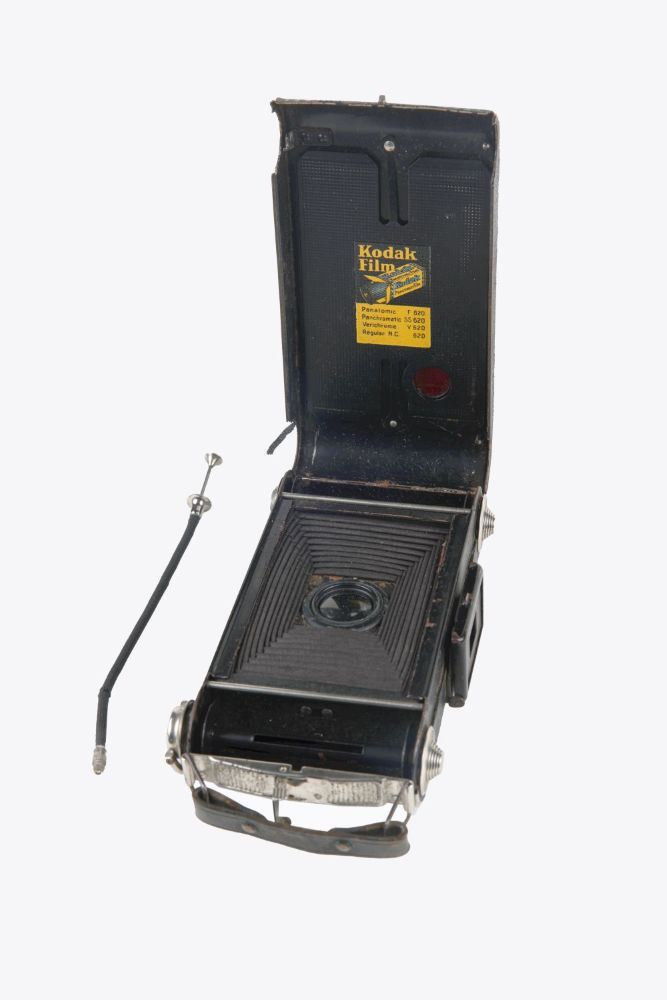
The camera was owned by Anton Cizara, born in 1915 in Slap near Vipava. He used this camera to photograph his military journey during the Spanish Civil War. He is the only person in Slovenia to have spoken openly about his experience fighting in this ideological war on the side of General Francisco Franco’s forces. As he stated, he went to Spain involuntarily and without supporting fascism. In 1936, when he was called up for military service as a Slovene from the Littoral region (Primorska), as an Italian citizen under the Kingdom of Italy, he was assigned to an Alpini mountain artillery unit in Pisa. He later signed up to work in Ethiopia but found himself in a situation where the Italian military authorities mobilized men without informing them of their final destination. Anton Cizara also photographed with this camera – which was easy to use and widely affordable at the time – during World War II.
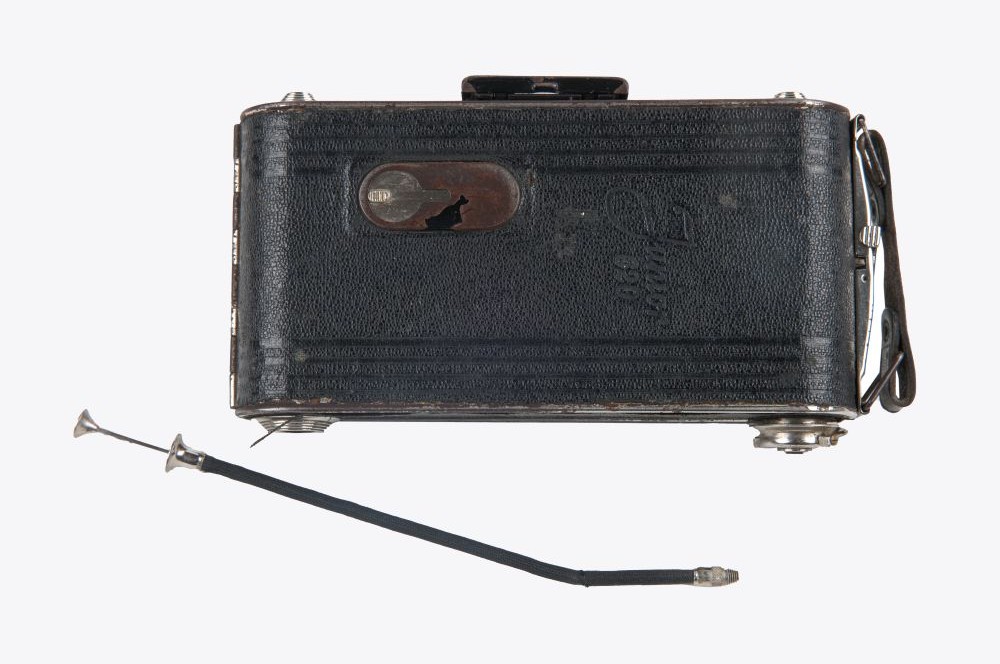
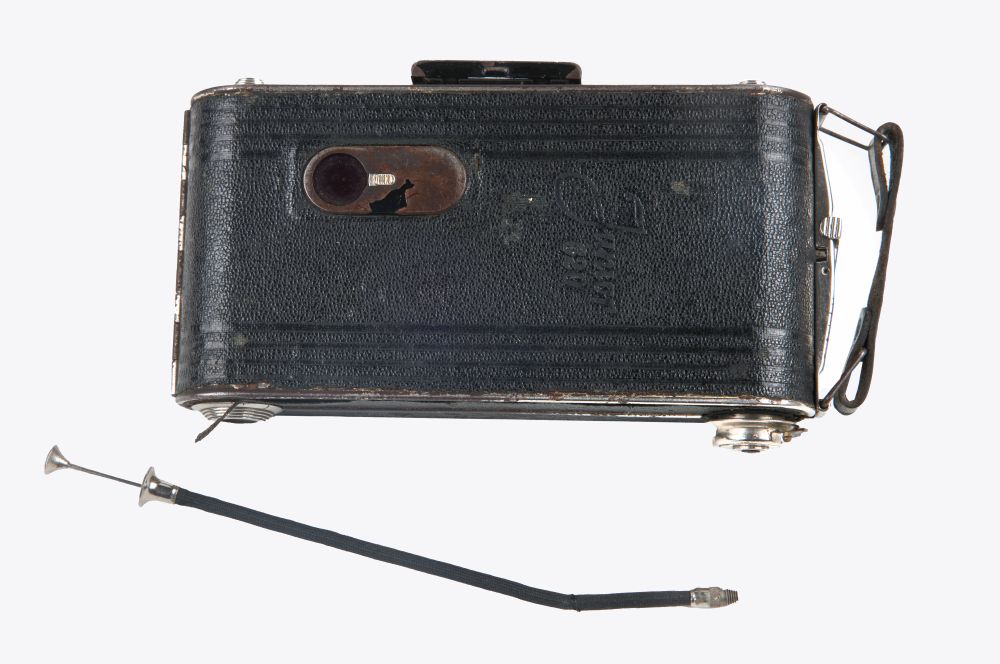
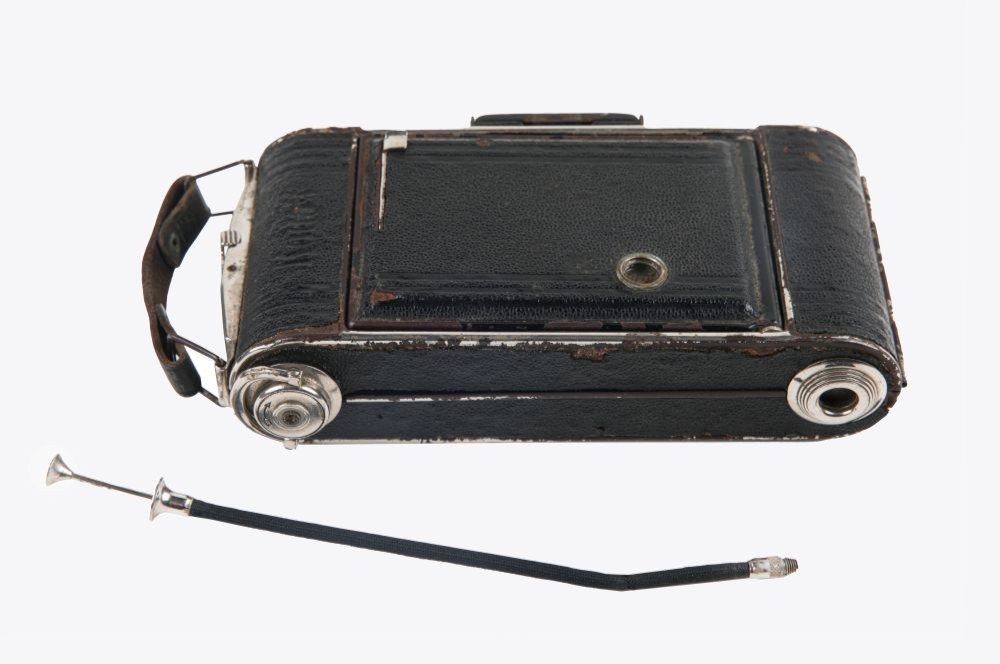
The camera, which is currently on display at the Depositories of the State Museums in Pivka and belongs to the National Museum of Contemporary History of Slovenia, was donated to the museum by his son Valter Cizara and daughter Vanja Velikonja.